
The difference between Inkjet and Laser Printers in Industrial Coding Applications
Jun
In food and beverage manufacturing, accurate and reliable product marking is non-negotiable. Batch numbers, expiration dates, lot codes and regulatory information must be printed with precision to ensure compliance, traceability and consumer confidence. Two of the most widely used printing technologies for these applications are Continuous Inkjet (CIJ) and Laser printers. While both achieve high-quality results, their underlying technologies, operating environments and application suitability differ.
How Continuous Inkjet Printing works
Continuous Inkjet (CIJ) printing is a non-contact printing method that propels a steady stream of ink droplets through a nozzle at high speed. The droplets are charged and deflected by an electric field to create precise characters on the substrate. Excess ink is recirculated within the system, making CIJ efficient and capable of continuous high-speed operation.
In food and beverage environments, CIJ printers excel at marking directly on metal cans, glass bottles, PET containers, films, and cartons – even when products are moving along a high-speed conveyor. The quick-drying inks are formulated to adhere to various surfaces, including curved, rough, or irregular ones.
How Laser Printers work
Laser printers use a focused beam of light to etch or ablate the surface of the packaging material. Rather than applying ink, laser systems permanently mark the substrate by changing its surface characteristics. This process is contactless and does not require inks or solvents, although the wider installation may require extraction or filtration systems, including periodic filter replacement, depending on the application.
Laser technology delivers extremely sharp, permanent marks and is ideal for certain rigid packaging types. However, its effectiveness depends heavily on the substrate’s ability to absorb the laser’s wavelength. Materials such as glass, coated paperboard, and certain plastics respond well; others may require laser-friendly coatings.
Key differences for Industrial applications
| Feature | Continuous Inkjet (CIJ) | Laser Coding |
|---|---|---|
| Marking Method | Ink droplets sprayed onto the surface | Laser beam etches or ablates surface |
| Consumables | Inks and solvents | No inks or solvents; extraction/filtration systems and periodic filters |
| Substrate Compatibility | Works on almost any surface, including porous, non-porous, flat, curved, or textured | Dependent on laser absorption; some materials require modification |
| Speed | Extremely fast, ideal for high-throughput production lines | Fast, but may be slower on complex codes or harder materials |
| Mark Permanence | Good permanence but may fade over time or in harsh conditions | Permanent, tamper-resistant marks |
| Operating Environment | Performs well in varied conditions, even with dust or moisture | Sensitive to dust, moisture, and vibration |


Why do food & beverage manufacturers often choose CIJ?
While laser coding has its place in industrial printing, Continuous Inkjet remains the go-to choice for many food and beverage producers due to its flexibility, adaptability and speed. CIJ is capable of printing on virtually any packaging type, including glass bottles, aluminium cans, PET containers, shrink wraps, pouches, and cartons, without changing the marking method.
For example:
- Beverage cans: CIJ systems apply legible batch codes at high speeds without slowing production.
- Glass jars for sauces or pickles: Inks adhere securely to curved surfaces.
- Flexible film packaging: Quick-dry inks avoid smudging during handling.
CIJ printers also offer fast changeovers, allowing manufacturers to switch between products or packaging formats with minimal downtime – a critical advantage in facilities producing multiple SKUs.
When are laser printers the better option?
Laser coding printers are often selected for applications where permanent, high-contrast markings are essential or where eliminating consumables is a priority. For example, premium spirits, pharmaceuticals, or high-value packaged goods may benefit from the tamper-proof nature of laser marks.
However, the initial investment, substrate limitations, extraction or filtration requirements, and potential need for additional safety measures to protect operators from laser exposure can make it less practical for certain high-volume food and beverage lines.
The role of MIT’s Continuous Inkjet solutions
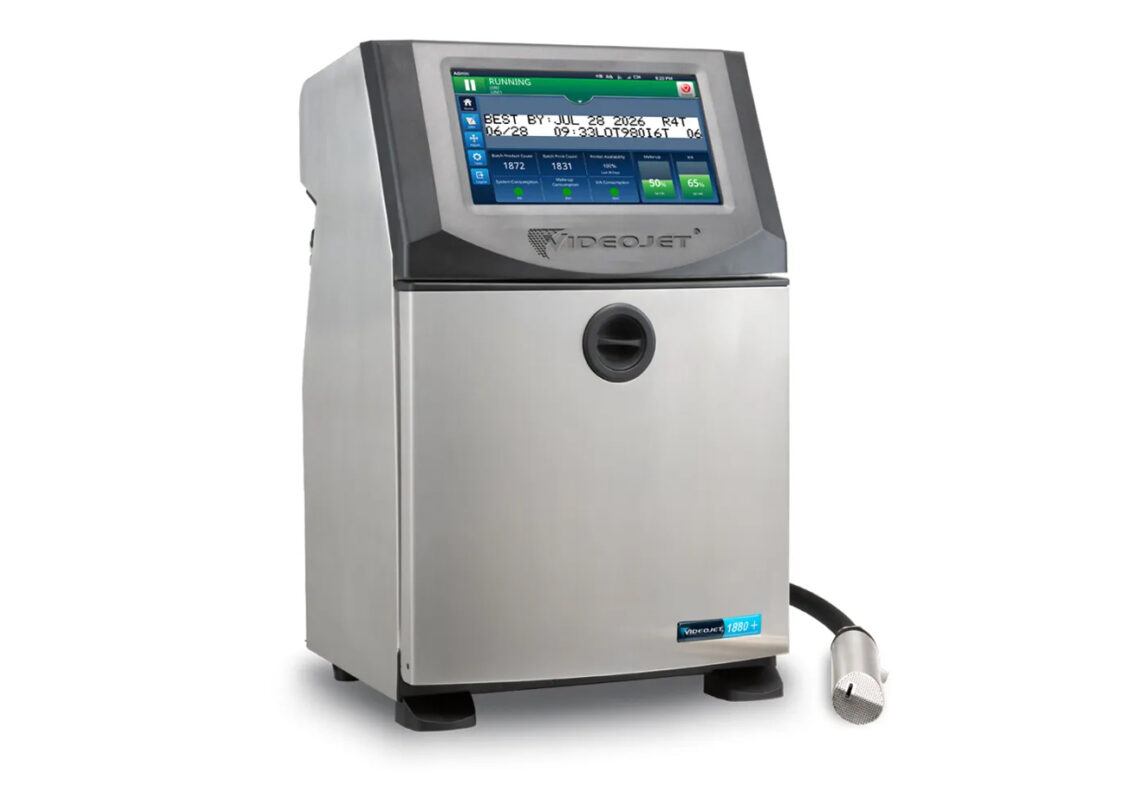
MIT is an official partner of Videojet, which has decades of experience developing CIJ technology specifically for industrial coding. These printers are designed to withstand washdowns, temperature fluctuations and dusty environments commonly found in food and beverage plants, while maintaining crisp, legible codes at speeds exceeding 300 metres per minute.
You can also get:
- Specialised inks for high adhesion, fast drying, and contrast
- Smart maintenance alerts to reduce unplanned downtime
- User-friendly interfaces for quick message changes
- Remote monitoring for proactive service and performance optimisation
Choosing between Continuous Inkjet and Laser Printers for industrial applications ultimately depends on the specific product, packaging material, production environment and business priorities. For many food and beverage producers, CIJ provides the flexibility, speed and cost-effectiveness needed to keep production lines running smoothly while meeting strict coding requirements.
By understanding the differences between these two technologies and working with an experienced coding and marking partner like Molenaar Industrial Technologies, manufacturers can implement the most suitable solution to protect product integrity, ensure regulatory compliance, and maintain consumer trust.